agents@dealhack$open this savings tip…
Free E-Book, Audiobook, Poetry, and Textbook Resources
read
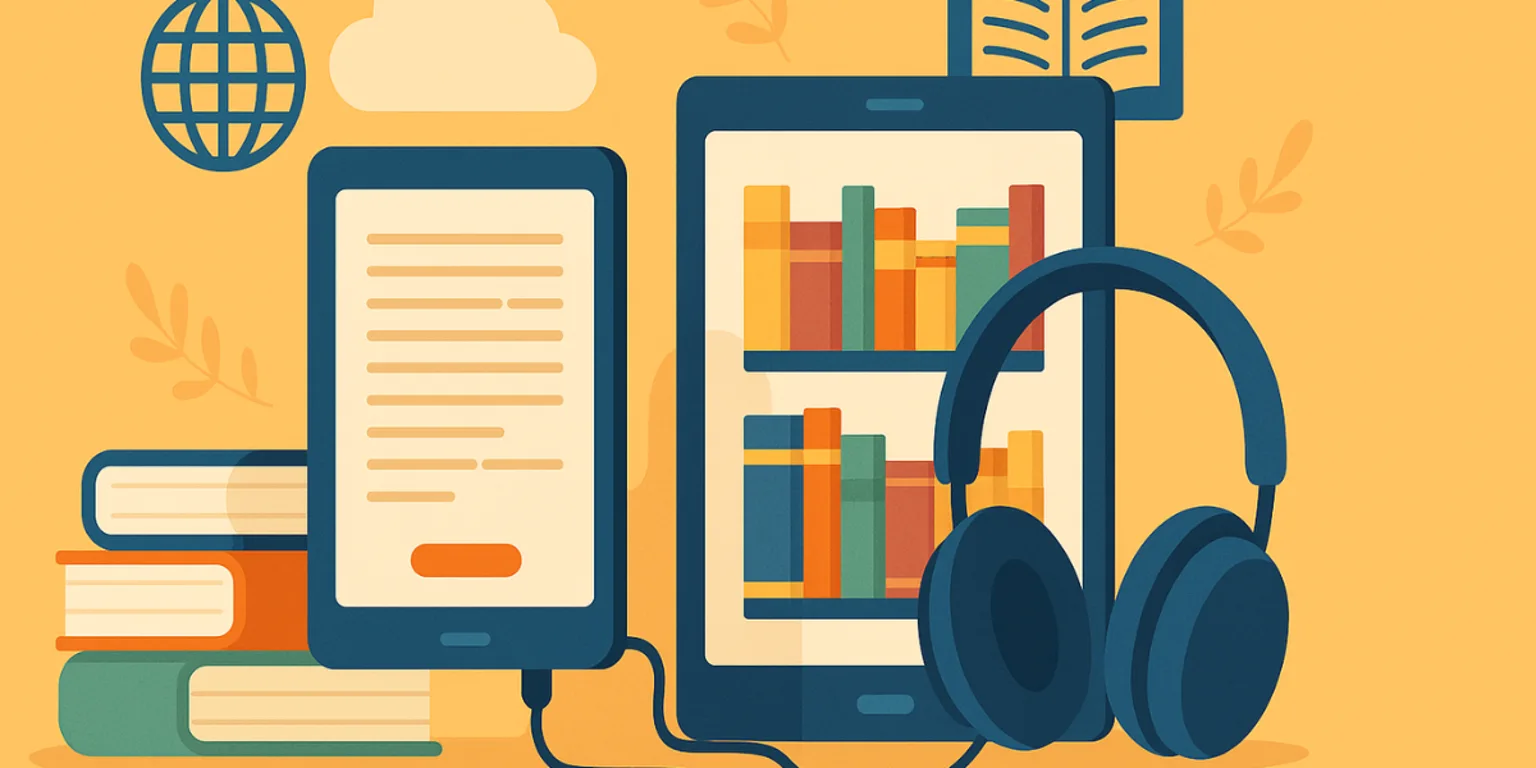
Access to free reading and listening material has never been better, even if it can sometimes feel overwhelming to sort out what's high-quality, legal, and genuinely free. Between public-domain projects, open-education initiatives, and nonprofit poetry organizations, there's now an entire ecosystem of resources online that can keep you stocked with e-books, audiobooks, poetry, and even full textbooks without touching your wallet.
For long-form reading, public-domain libraries are often the best starting point. Project Gutenberg is the grandparent of them all, hosting more than 70,000 free e-books, most of them classic works whose copyrights have expired. Volunteers scan, proofread, and format these texts into multiple file types (EPUB, Kindle, HTML, plain text), making it easy to load them onto almost any device. If you're building a digital classics shelf, this kind of collection makes it incredibly simple.
Other digital libraries expand that idea even further. The Internet Archive is a nonprofit project that aims to provide "universal access to all knowledge," and its books section includes millions of items, some fully downloadable and some available for timed digital borrowing through a free account. You can move from a 19th-century novel to a mid-20th-century history text or a niche hobby manual in a few clicks. Some of these items remain under copyright and are only available for limited loan periods, but a significant portion is free to read outright, particularly older texts and government publications.
Listening options have kept pace with reading as well. LibriVox is one of the best-known free audiobook projects: Volunteers around the world record books that are in the public domain and release them as free downloads and streams. The result is a constantly growing, multilingual catalog that encompasses everything from polished solo performances of Jane Austen to collaborative recordings, each featuring a distinct voice.
Poetry deserves its own corner of the free-content world, and it has several strong advocates. The Poetry Foundation maintains a vast, searchable archive of more than 40,000 poems, along with biographies of poets, essays, and audio recordings of readings. Many of these poems are modern works still under copyright, so you'll be reading them on the website rather than downloading them, but the access is free and the browsing tools are excellent if you're exploring by theme, mood, or form. The Academy of American Poets also offers a complimentary collection, featuring thousands of poems, poet bios, teaching resources, and a Poem-a-Day feature that delivers a new poem daily via email or RSS feed. Both organizations also curate notable public-domain poetry anthologies, which can be used freely in projects, classrooms, or personal collections.
For more academically oriented reading, especially if you're studying or supporting a student, open textbook initiatives can dramatically cut costs. OpenStax, a nonprofit project based at Rice University, publishes more than 50 peer-reviewed, openly licensed textbooks that cover standard high school and introductory college courses. These books are available as free online versions and downloadable PDFs, with optional low-cost print copies also available. Because they're openly licensed, instructors can adapt the material for their courses, and students can retain the texts permanently without worrying about access expiring. Other platforms, such as Bookboon or FreeTechBooks, focus on business, engineering, and computing, offering legally free titles from publishers and authors who opt into open distribution.
It's worth noting that legal access matters as much as price. Many sites that promise "free" recent bestsellers operate in a gray area or outright ignore copyright. Reputable projects typically make their status very clear: They restrict themselves to public-domain works, partner with libraries or universities, or publish under specific open licenses, such as those provided by Creative Commons. Project Gutenberg, LibriVox, OpenStax, and the major poetry organizations all fall squarely into that category, which is why they're widely recommended by libraries and universities. When you lean on these sources, you're supporting long-running nonprofit efforts rather than undermining authors and publishers.
With just a few of these resources, it's possible to build a rich personal library of classics to read on an e-reader, audiobooks for commutes or walks, poems for inspiration, and full textbooks for self-study. The biggest challenge isn't finding something to read or listen to: It's deciding where to start!
Audiobooks and E-Books
- Project Gutenberg
- WeLib
- Internet Archive eBooks and Texts
- Library of Congress Reading Resources
- Open Library
- Ocean of PDF
- LibriVox
- Digital Public Library of America
- Bookshare
- Lit2Go
- Public Domain Library
Poetry
- The Poetry Foundation
- Internet Archive Poetry Works
- All Poetry - Famous Poems
- Poetry Archive
- Poets.org
- OpenPoet